


Every year, our production lines handle hundreds of first-time orders from buyers who have never imported a single t-shirt before product specifications 1. The pattern is always the same. They find a supplier, skip the details, and end up with shirts that feel wrong, fit wrong, or arrive too late. Most of these problems are preventable. The real challenge is not finding a cheap t-shirt in China. It is knowing what to ask, what to check, and when to say no.
To source cotton promotional t-shirts from China for the first time, you need to define your product specifications clearly, vet multiple suppliers through sampling, confirm cotton quality and print method before mass production, and plan logistics with enough buffer time to avoid costly delays.
This guide walks you through each step of the process. Whether you are ordering 200 polo shirts for a trade show or 5,000 printed tees for a brand campaign, the workflow below will help you avoid the most common first-time sourcing mistakes.
How do I find a reliable Chinese supplier for my first custom promotional t-shirt order?
When we ship samples to new buyers in Europe or the US, the first question they usually ask is how they should have started their search. Many of them found us only after a bad experience with a random listing online. The pain is real. You send money, wait weeks, and receive shirts that look nothing like the photos. The problem is not that good suppliers are rare. The problem is that most first-time buyers do not know how to filter.
To find a reliable Chinese supplier, start by preparing a clear product spec sheet, then contact three to five manufacturers through B2B platforms or referrals, compare their responses, request samples, and verify their production capability before committing to a bulk order.

Prepare Your Spec Sheet First
Before you contact anyone, write down exactly what you need. This sounds obvious, but most first-time buyers skip it. They send a vague message like "I need cotton t-shirts, what's your price?" and get vague answers back. A spec sheet forces both you and the supplier to speak the same language.
Your spec sheet should include:
- Fabric type (100% cotton or cotton blend)
- Fabric weight in GSM (grams per square meter) 2
- Garment style (crew neck, polo, V-neck)
- Size range and fit (regular, slim, kids)
- Colors (Pantone codes if possible)
- Print method (screen print, DTG, embroidery)
- Logo size and placement
- Quantity per color, per size, per design
- Packaging requirements
- Target delivery date
When our team receives a spec sheet like this, we can return an accurate quote within 24 hours. Without it, the back-and-forth can take a week.
Where to Search for Suppliers
There are three main channels first-time buyers use to find Chinese t-shirt manufacturers. Each has trade-offs.
| Channel | Pros | Cons |
|---|---|---|
| B2B platforms 3 (Alibaba, Made-in-China) | Large supplier pool, trade assurance 4, easy to compare | Quality varies widely, many trading companies disguised as factories |
| Supplier directories and trade shows | Verified manufacturers, face-to-face contact | Requires more time and sometimes travel |
| Referrals and direct outreach | Higher trust, often better communication | Smaller pool, relies on existing network |
If you use a platform like Alibaba, look for Gold Suppliers with trade assurance. But do not stop there. Ask for factory photos, production videos, and references. A real factory will show you the floor.
How to Shortlist and Compare
Once you have three to five candidates, send the same spec sheet to each one. Compare their responses on these criteria:
- Response speed and communication quality
- Clarity of pricing breakdown
- MOQ (minimum order quantity) flexibility
- Sample policy and cost
- Stated lead time for custom orders
- Willingness to share past work or client references
In our experience, a supplier who asks you detailed questions about your project is usually more reliable than one who just says "yes, we can do it" to everything. Good suppliers want to understand your needs before quoting.
Use Secure Payment Methods
For first-time orders, always use a secure payment method. Trade assurance on Alibaba, escrow services 5, or at least a split payment (30% deposit, 70% before shipment) are standard. Never wire 100% upfront to a supplier you have not worked with before.
What should I look for in a sample to ensure the cotton quality meets my brand standards?
One lesson we learned early on our production floor is that cotton is not just cotton. Two t-shirts labeled "100% cotton" can feel completely different. One might be soft and heavy. The other might be thin and scratchy. If you are putting your brand name on a shirt, the fabric is your reputation. Skipping the sample stage is the single most expensive mistake a first-time buyer can make.
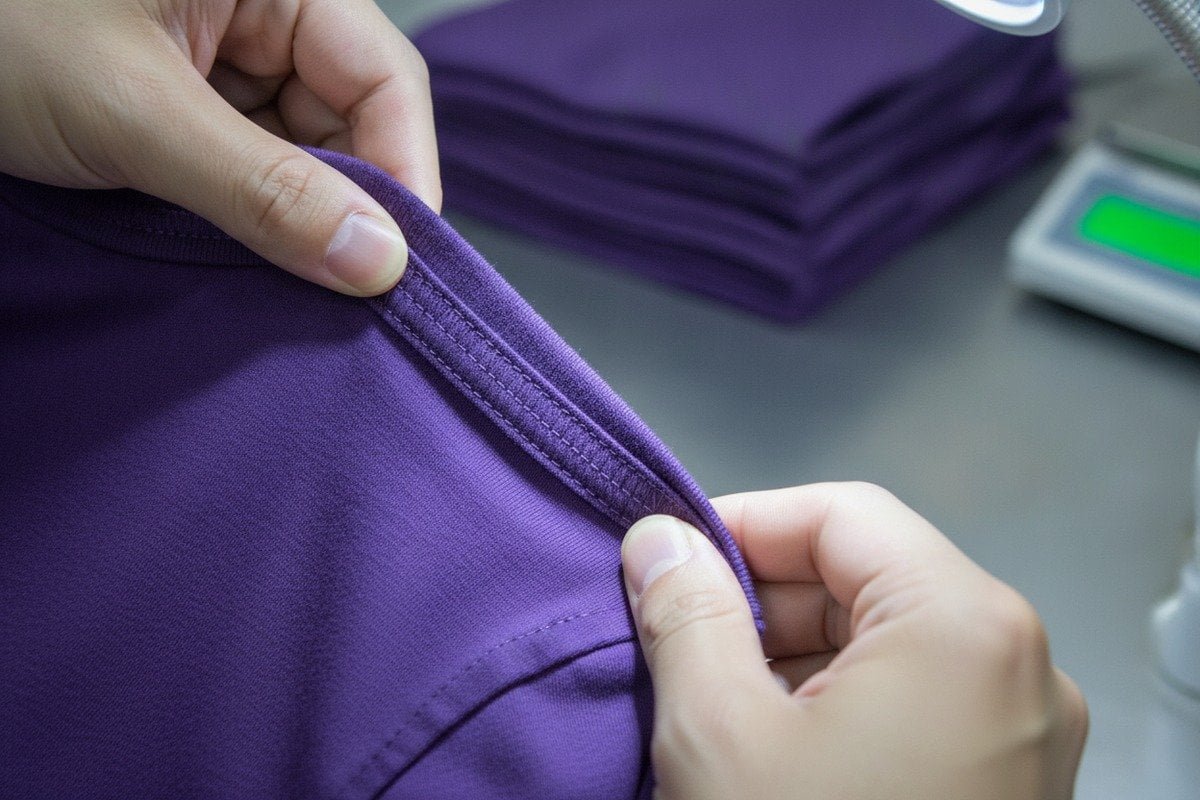
When reviewing a sample, check the fabric weight, softness, shrinkage after washing, seam quality, collar shape retention, color accuracy, and print adhesion. Wash the sample at least once before approving it, because cotton behavior after washing reveals its true quality.
Understanding Cotton Quality Variables
Not all cotton is equal. The word "cotton" on a label tells you the fiber type, but not the grade. Here are the variables that directly affect how a promotional t-shirt looks and feels:
| Quality Variable | What It Means | Why It Matters |
|---|---|---|
| GSM (fabric weight) | Grams per square meter, typically 130–220 GSM for tees | Heavier GSM generally means a thicker, more durable shirt |
| Ring-spun vs open-end yarn 6 | Ring-spun is smoother and softer; open-end is cheaper | Affects handfeel and print surface quality |
| Combed vs carded cotton 7 | Combed cotton removes short fibers for a smoother finish | Combed shirts look and feel premium |
| Single jersey vs interlock knit | Single jersey is standard; interlock is thicker and heavier | Interlock resists curling and holds shape better |
| Pre-shrunk treatment | Fabric is pre-washed or compacted to reduce shrinkage | Untreated cotton can shrink 5–8% after the first wash |
| Color fastness rating 8 | How well the dye holds after washing and sun exposure | Low fastness means faded shirts after a few washes |
A promotional t-shirt for a one-time event might be fine at 150 GSM with open-end yarn. But if your shirts are for employee uniforms or retail giveaways that people will wear repeatedly, aim for 180 GSM or above with ring-spun, combed cotton.
The Wash Test Is Non-Negotiable
When we send samples to buyers, we always recommend they wash the shirt before approving. A fresh sample looks great. But cotton changes after washing. Check for:
- Shrinkage in length and width
- Color fading or bleeding
- Collar stretching or warping
- Print cracking, peeling, or fading
- Pilling on the fabric surface
If the sample fails the wash test, do not approve production. Ask the supplier to adjust the fabric or treatment.
Print and Decoration Quality
Promotional t-shirts live or die by their logo. A shirt with a cracked, faded, or misaligned print does more harm than good for your brand. When you receive a sample, check these print details:
- Is the logo centered and level?
- Are the colors accurate compared to your artwork file?
- Does the print feel stiff or soft against the fabric?
- Does the print survive washing without visible damage?
Cotton generally prints well, especially for screen printing 9. But the print result depends on fabric surface quality. A rough, open-end cotton knit may show uneven ink coverage. A smooth, ring-spun knit will print cleaner.
How Many Samples Should You Order?
Ideally, order samples from at least two or three suppliers. Compare them side by side. Touch them, wear them, wash them. One sample costs a few dollars and a few days. A bad bulk order costs thousands and months. The math is simple.
How can I get the best wholesale pricing without risking the quality of my promotional apparel?
Price is always part of the conversation. When our sales team talks to first-time buyers, the question comes up within the first five minutes. And it should. Budget matters. But the buyers who get the best long-term value are never the ones chasing the absolute lowest unit price. They are the ones who understand what drives cost and negotiate smartly within that structure.
To get the best wholesale pricing without sacrificing quality, consolidate your order quantities, simplify your design and color range, choose cost-effective print methods for your volume, compare landed costs rather than unit prices, and negotiate based on a long-term relationship rather than a single order.
What Drives the Unit Price?
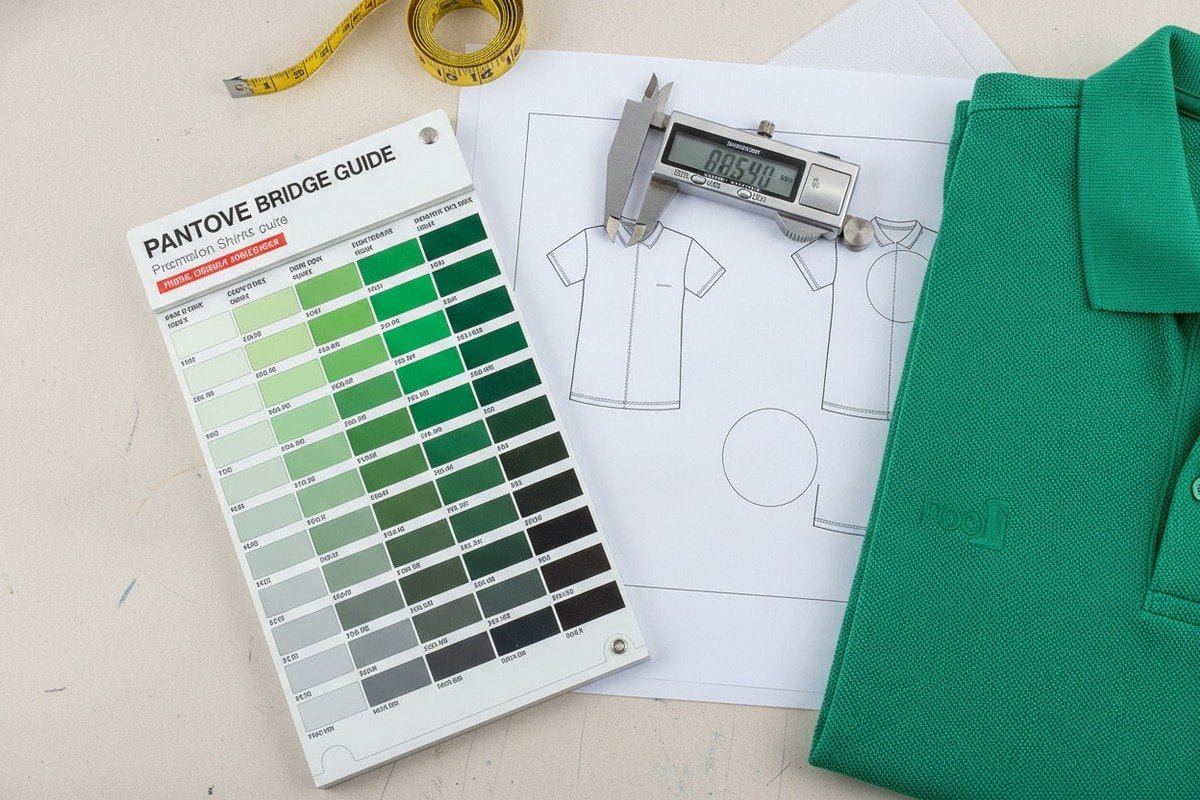
The price of a cotton promotional t-shirt from China is not one number. It is a combination of several cost factors. Understanding these factors helps you negotiate without accidentally cutting quality.
| Cost Factor | Lower Price | Higher Price |
|---|---|---|
| Cotton grade | Open-end, carded | Ring-spun, combed |
| Fabric weight | 130–150 GSM | 180–220 GSM |
| Print method | Single-color screen print | Full-color DTG or embroidery |
| Order quantity | 1,000+ pieces | Under 200 pieces |
| Number of colors/designs | 1–2 | 5+ |
| Packaging | Polybag bulk pack | Individual folding with hang tags |
| Delivery speed | Standard sea freight | Express air freight |
When a supplier gives you a quote that seems too cheap, check which of these factors they cut. A shirt at $1.50 might use 130 GSM open-end cotton with a single-color print. A shirt at $3.00 might use 180 GSM ring-spun cotton with a three-color screen print and individual poly bagging. Both are valid. But you need to know what you are comparing.
Smart Ways to Lower Cost Without Losing Quality
You do not have to accept the cheapest fabric to save money. Here are practical strategies:
- Increase order volume. MOQs for custom t-shirts often start around 100 pieces per color per design. But pricing drops noticeably at 500 and again at 1,000 pieces. If you can consolidate orders across events or departments, you gain leverage.
- Reduce color and design complexity. Fewer print colors and fewer unique designs mean less setup cost. A two-color screen print is significantly cheaper than a six-color one.
- Use standard blanks. If a supplier already stocks a standard cotton tee in common colors, your custom print on that blank is cheaper than a fully custom garment from scratch.
- Ship by sea. Sea freight costs a fraction of air freight. If your timeline allows, always choose ocean shipping.
- Think landed cost. The unit price on the invoice is not your real cost. Add freight, customs duties, insurance, and inland transport. Sometimes a slightly more expensive supplier with better FOB terms or included packaging saves you money overall.
Negotiate Based on Partnership, Not Just Price
In our experience, the best pricing comes from repeat relationships. A first-time order is always more expensive per unit because the supplier invests time in setup, sampling, and communication with no guarantee of a second order. If you signal long-term intent, many suppliers will offer better terms even on the first order. Share your annual volume forecast. Mention your next planned project. This is not a trick. It is how B2B pricing actually works.
What steps can I take to avoid delivery delays and shipping issues on my first bulk order?
Late deliveries have caused more damage to buyer-supplier relationships than almost any other issue we have seen. A buyer plans a trade show, orders 2,000 printed tees, and the shipment arrives a week after the event. The shirts are perfect. But they are useless. Timing is everything in promotional apparel. And the biggest timing mistakes happen because first-time buyers underestimate how many steps sit between order confirmation and delivery.
To avoid delivery delays, build a realistic timeline that accounts for sampling, revisions, production, quality inspection, and shipping. Confirm lead times in writing, add buffer days at every stage, choose your shipping method early, and arrange pre-shipment inspection before the goods leave the factory.

Understanding the Real Timeline
Most first-time buyers think "lead time" means one number. In reality, your total timeline is a chain of steps, and a delay in any one link pushes everything back.
Here is a realistic timeline breakdown for a custom cotton promotional t-shirt order:
| Stage | Typical Duration | Notes |
|---|---|---|
| Spec finalization and quoting | 2–5 days | Depends on buyer readiness |
| Sample production | 5–10 days | Includes fabric sourcing if custom color |
| Sample shipping | 3–7 days (express) | International courier to buyer |
| Sample review and approval | 3–7 days | Buyer side; include wash test time |
| Revisions (if needed) | 5–10 days | New sample may be required |
| Mass production | 15–30 days | Depends on quantity and complexity |
| Quality inspection | 1–3 days | In-factory or third-party |
| Packing and preparing shipment | 2–3 days | Carton labeling, packing lists |
| Sea freight shipping | 20–35 days | To US or Europe |
| Air freight shipping | 5–10 days | Faster but significantly more expensive |
| Customs clearance | 2–5 days | Varies by destination country |
Add these up and you can see why a "simple" t-shirt order can take 8 to 12 weeks from first contact to delivery at your warehouse. If you need shirts for a specific event, count backwards from that date and add at least one week of buffer.
Common Causes of Delay
Here is what goes wrong most often, based on patterns we see in our own order management:
- Artwork files are not print-ready. Low-resolution logos or missing vector files force the supplier to request revisions, adding days.
- Sample approval takes too long. If the buyer does not review the sample quickly, production start gets pushed.
- Fabric is out of stock. Custom colors or specific GSM weights may need to be dyed or woven, which adds one to two weeks.
- Chinese holidays. Chinese New Year (January or February) shuts down factories for two to four weeks. National Day in October causes a one-week pause. Plan around these.
- Port congestion or shipping delays. Especially during peak seasons (August through October), container space is tight and transit times increase.
Pre-Shipment Inspection
Before goods leave the factory, you should verify quality one final time. This can be done by the supplier's internal QC team, but for first-time orders, consider hiring an independent third-party inspector. They check measurements, stitching, print placement, color accuracy, packaging counts, and carton labeling. The cost is small compared to the cost of receiving defective goods overseas.
Shipping Method Decisions
Choose your shipping method early. Sea freight is cost-effective for bulk orders but slow. Air freight is fast but expensive. For urgent promotional deadlines, some buyers split the order: ship a small batch by air for the event and send the rest by sea for restocking. This is a practical compromise when timing is tight.
Always ask your supplier for a quote that includes shipping, or at least a clear FOB price so you can arrange your own freight forwarder. Knowing your Incoterms 10 (FOB, CIF, EXW) helps you understand who is responsible for what during transit.
Conclusion
Sourcing cotton promotional t-shirts from China for the first time does not have to be stressful. Define your specs, vet your suppliers, test your samples, and plan your timeline with honest buffers. Every successful bulk order starts with preparation, not luck.
Footnotes
1. Replaced HTTP 404 Wikipedia link with a working and relevant Wikipedia page about technical specifications, which encompasses product specifications. ↩︎
2. Explains how fabric weight, including GSM, is measured in the textile industry. ↩︎
3. Explains the concept of business-to-business transactions and platforms. ↩︎
4. Details Alibaba's program designed to protect buyers' orders and payments. ↩︎
5. Replaced HTTP 403 Investopedia link with an authoritative definition of escrow from the Legal Information Institute at Cornell Law School. ↩︎
6. Compares ring-spun and open-end yarn, highlighting differences in quality and use. ↩︎
7. Differentiates between carded and combed cotton, explaining their impact on fabric quality. ↩︎
8. Replaced HTTP 404 ASTM link with a comprehensive guide on colorfastness test methods and rating systems for textiles. ↩︎
9. Provides a comprehensive overview of the screen printing technique. ↩︎
10. Explains the official rules published by the ICC for international trade. ↩︎



Discussion
0 Comments
No comments yet. Be the first to share your thoughts!
Leave a Comment