


Every year, our production team handles hundreds of cotton promotional t-shirt orders for brands across Europe and the US. One question keeps coming up from procurement managers: "How do I know your social responsibility audits 1 are real?" It is a fair question. The promotional apparel industry is full of vague ethical claims, and a single bad supplier can damage your brand overnight.
To verify social responsibility audits when sourcing cotton promotional t-shirts, request the specific audit standard, the auditing body's name, the certificate number, the audit date and scope, any corrective-action records, and chain-of-custody documentation for the cotton. Cross-check certificates against public registers and never accept vague claims without third-party evidence.
This guide walks you through the exact steps, certifications, and red flags you need to know before placing your next order. Let's break it down section by section so you can build a verification workflow that actually protects your brand.
When we prepare quotations for new clients, the first thing we share alongside pricing is our factory partners' certification portfolio. But not every certification carries the same weight, and many buyers confuse product certification 2s with factory certifications.
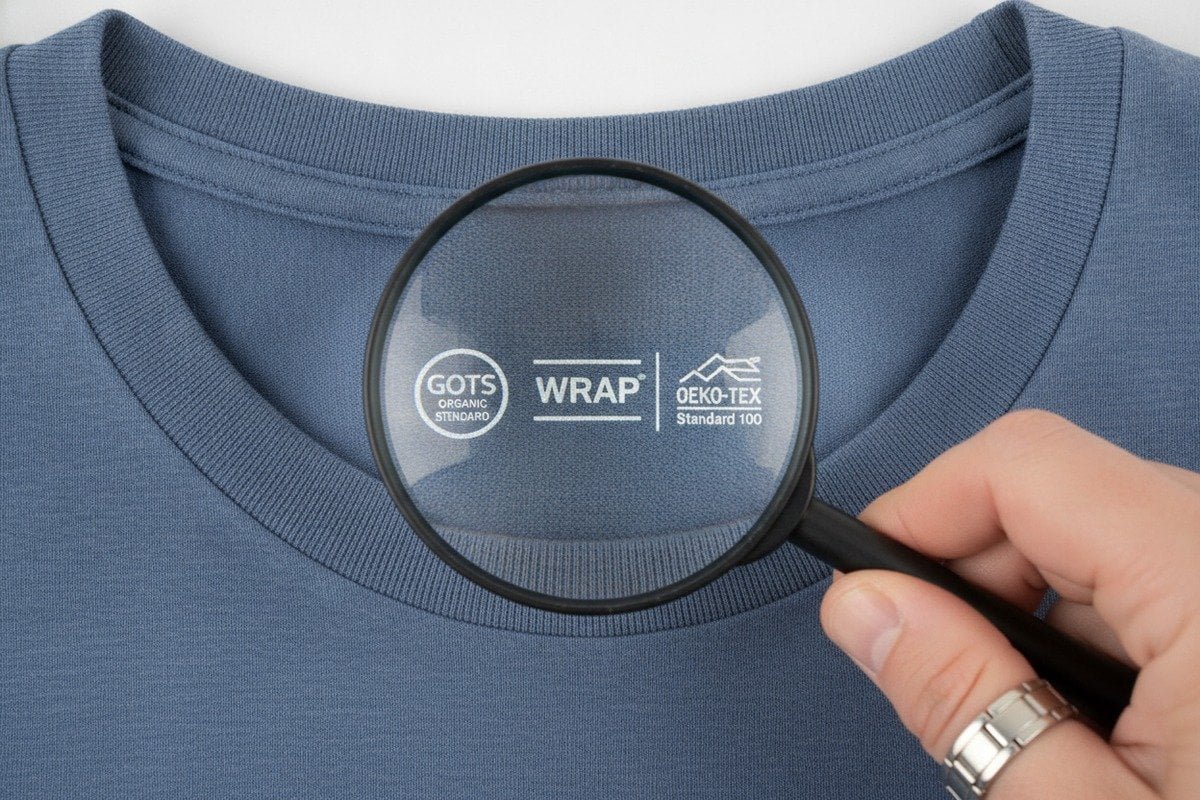
For cotton promotional t-shirts, prioritize GOTS for organic cotton integrity, Fairtrade or Better Cotton for sourcing ethics, SA8000 or WRAP for factory-level social compliance, and OEKO-TEX for product safety. Each certification covers a different layer of risk, so a combination gives the strongest protection.
Understanding the Three Types of Certifications
There is a critical difference between a product certification, a factory certification, and a system certification. Many buyers treat them as the same thing. They are not.
A product certification like GOTS 3 or Fairtrade confirms that the material in your t-shirt meets specific standards from raw cotton to finished garment. A factory certification like WRAP 4 confirms that the specific factory where your shirts are sewn meets social compliance principles. A system certification like SA8000 5 confirms that the company has a management system in place to maintain social responsibility standards over time.
You need at least one from each category to cover your bases.
Key Certifications at a Glance
| Certification | Type | What It Covers | Validity Period |
|---|---|---|---|
| GOTS (Global Organic Textile Standard) | Product | Organic fiber content, social criteria, environmental processing | 1 year, renewable |
| Fairtrade 6 Cotton | Product / Sourcing | Fair prices to farmers, community premiums, labor rights at farm level | Ongoing with annual audits |
| Better Cotton 7 (BCI) | Sourcing | Sustainable farming practices, worker welfare at farm level | Annual licensing |
| SA8000 | System | Child labor 8, forced labor, health & safety, working hours, wages | 3 years with surveillance audits |
| WRAP (Worldwide Responsible Accredited Production) | Factory | 12 principles covering legal compliance, labor, safety, environment | 1–2 years depending on level |
| OEKO-TEX Standard 100 9 | Product Safety | Harmful substances testing on finished textile | 1 year |
| Fair Wear Foundation | System / Network | Labor conditions based on ILO standards, worker complaints mechanism | Ongoing membership with annual review |
Which Combination Works Best for Promotional T-shirts?
For a typical branded cotton t-shirt order, here is what we recommend to our clients. Start with WRAP or SA8000 for the sewing factory. Add GOTS or Fairtrade if you are marketing the shirts as organic or ethically sourced. Then confirm OEKO-TEX if your end market requires product safety testing.
This layered approach covers the factory floor, the cotton supply chain, and the finished product. No single certificate covers all three.
A Word on Better Cotton
Better Cotton uses a mass-balance model. This means the cotton in your specific t-shirt may not be physically traceable to a Better Cotton farm. Instead, the system ensures that the same volume of Better Cotton was produced somewhere in the supply chain. This is fine for supporting sustainable farming at scale, but it does not give you physical traceability to the fiber in your garment. If traceability matters to your brand story, GOTS or Fairtrade provides a stronger chain-of-custody model.
How can I verify that the audit reports provided by my supplier are actually authentic?
Our team has seen suppliers forward audit certificates that were expired, belonged to a different facility, or in some cases, were completely fabricated. It is uncomfortable to talk about, but it happens. The good news is that verification is straightforward once you know where to look.
Verify audit authenticity by requesting the certificate number and checking it on the certifying body's public database. Cross-reference the facility name, address, audit date, and scope. Contact the auditing firm directly if needed. Never accept a PDF certificate alone without independent confirmation from the issuing organization.
Step-by-Step Verification Process
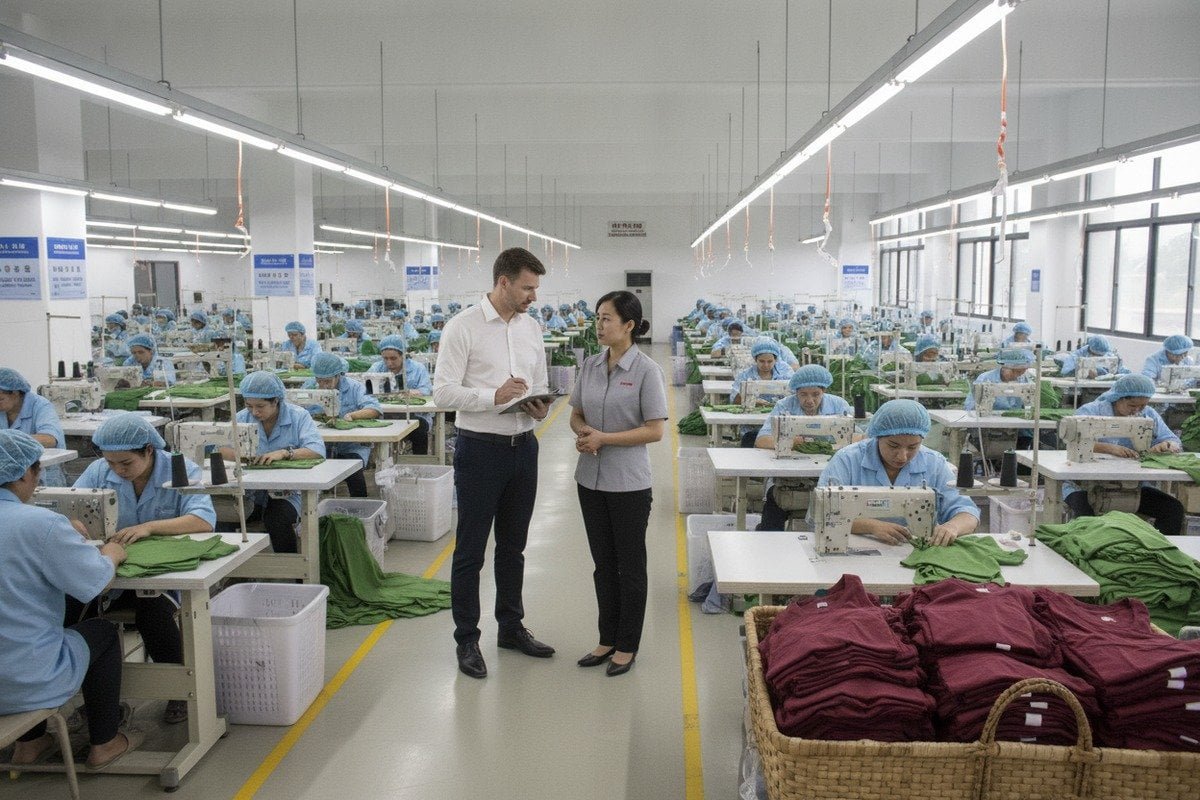
Here is the exact process we walk our European and US clients through when they ask about our partner factories' compliance records.
Step 1: Request the full certificate, not a summary. Ask for the actual certificate document including the certificate number, issuing body, facility name and address, scope of the audit, and expiry date.
Step 2: Check the public register. Most credible certification bodies maintain searchable databases. GOTS has an online public database. WRAP has a certified facility search. SA8000 has a public list maintained by Social Accountability International. If the certificate number does not appear in the database, that is an immediate red flag.
Step 3: Match the facility details. Confirm that the factory name and address on the certificate match the factory where your order will actually be produced. Some suppliers hold certificates for one factory but produce in a different, uncertified location.
Step 4: Check the date. Certificates expire. A WRAP certificate from two years ago may no longer be valid. Always confirm the certificate is current at the time of your order.
Step 5: Ask about corrective actions. A clean audit with zero findings is rare and can itself be suspicious. Ask the supplier whether the last audit identified any non-conformities and what corrective actions were taken. Transparency here is a sign of a mature supplier.
Verification Databases You Can Use
| Certification | Where to Verify | URL Type |
|---|---|---|
| GOTS | GOTS Public Database | Searchable by company, certificate number, or country |
| WRAP | WRAP Certified Facilities Search | Searchable by facility name or country |
| SA8000 | SA-Intl Certified Organizations List | Downloadable list or searchable database |
| OEKO-TEX | OEKO-TEX Label Check | Searchable by label number |
| Fairtrade | Fairtrade International Certificate Holder Search | Searchable by name or product |
| Better Cotton | BCI Platform Members List | Searchable by retailer or brand membership |
Red Flags That Signal Fake or Misleading Audits
Watch out for these warning signs:
- The supplier provides a certificate but refuses to share the certificate number.
- The certificate shows a generic company name instead of a specific factory address.
- The audit date is more than 18 months old with no renewal evidence.
- The supplier claims "ethical manufacturing" or "responsible sourcing" without naming any specific standard or auditing body.
- The corrective-action section is blank or the supplier says "no issues were found" across all categories.
When we onboard a new factory partner for our supply chain, we run this same checklist. If a factory cannot pass these basic verification steps, we do not work with them. It is that simple.
Can You Contact the Auditing Firm Directly?
Yes. Reputable auditing firms such as Bureau Veritas, SGS, Intertek, and TÜV will confirm whether they audited a specific facility. You can email or call them with the certificate number. If the supplier objects to this step, consider that a serious warning sign.
What steps should I take to ensure my promotional apparel is produced in ethically compliant factories?
Over the past several years, we have built a supplier qualification process specifically because our European clients, especially those in Italy and the UK, demand documented ethical compliance. The process is not complicated, but it must be systematic.
To ensure ethical compliance, define your non-negotiable standards before sourcing, require named certifications and audit evidence during supplier selection, verify factory-specific documents independently, visit or commission third-party inspections at the production facility, and confirm cotton origin through chain-of-custody documentation.

Define Your Ethical Non-Negotiables First
Before you contact any supplier, write down exactly what "ethical" means for your brand. This is not a philosophical exercise. It is a practical sourcing requirement.
Your list should include specific positions on:
- Child labor: Zero tolerance, with age verification processes.
- Forced labor: Explicit exclusion, including documentation on cotton origin.
- Working hours: Compliance with local law or ILO standards, whichever is stricter.
- Wages: At least local minimum wage, ideally living wage commitments.
- Health and safety: Fire safety, protective equipment, clean facilities.
- Discrimination: Policies against discrimination based on gender, religion, or ethnicity.
Once your list is clear, you can match it against specific standards. SA8000, for example, covers all of these areas. WRAP covers 12 principles that align closely with this list. Without your own defined requirements, you have no benchmark to evaluate what a supplier shows you.
The Cotton Origin Question
For cotton promotional t-shirts, the origin of the raw cotton is a specific risk area. Some regions are associated with forced-labor concerns. Multiple suppliers in the promotional apparel space now certify that their cotton is not sourced from high-risk regions, particularly China's Xinjiang province.
Ask your supplier for explicit documentation on cotton origin. This can include:
- Chain-of-custody certificates from GOTS or Fairtrade.
- Supplier declarations on cotton origin with named source countries.
- In advanced cases, isotope testing results that verify the geographic origin of cotton fibers at the molecular level.
Isotope testing is still relatively rare in promotional apparel, but it is growing. Some brands now require it for high-volume orders as an independent check against mislabeling.
Build a Supplier Qualification Checklist
Here is the checklist we use internally when evaluating a new factory for our clients' cotton t-shirt orders.
| Checklist Item | Document Required | Verification Method |
|---|---|---|
| Factory social audit | WRAP, SA8000, or equivalent certificate | Check public database |
| Audit date and validity | Certificate with expiry date | Confirm not expired |
| Corrective actions | Corrective Action Plan (CAP) report | Request from supplier |
| Cotton origin | Chain-of-custody certificate or supplier declaration | Cross-reference with certification body |
| Forced labor 10 exclusion | Written supplier statement on cotton sourcing regions | Review against known high-risk region lists |
| Product certification | GOTS, Fairtrade, or OEKO-TEX certificate | Check public database |
| Worker grievance mechanism | Description of worker complaint system | Ask supplier to describe process |
| Unannounced audit history | Records of unannounced audits in last 24 months | Request from auditing body or supplier |
Announced vs. Unannounced Audits
This distinction matters. An announced audit gives the factory time to prepare, which can mean temporary improvements that disappear after the auditor leaves. An unannounced audit, or a semi-announced audit where the factory knows the audit will happen within a window but not the exact date, provides a more realistic picture of daily conditions.
When evaluating a supplier, ask whether their audits are announced or unannounced. Factories that accept unannounced audits are generally more confident in their ongoing compliance.
Worker Voice: The Missing Layer
Traditional audits rely on what auditors observe and what managers report. But workers themselves often have different stories. Leading social compliance systems now incorporate worker voice platforms, which are anonymous channels where workers can report issues directly, often through mobile phones.
If your supplier's factory participates in a worker voice program or has a functioning grievance mechanism, that is a strong positive signal. It means the factory is not relying solely on periodic audits to catch problems.
When we start production on a new promotional t-shirt order, the initial audit verification is only the beginning. Conditions in factories change. Certifications expire. Subcontracting can shift production to uncertified facilities without notice. The real challenge is not getting the first audit right — it is maintaining oversight throughout your supplier relationship.
Monitor ongoing compliance by scheduling regular document reviews, requiring suppliers to notify you of any certification changes, commissioning periodic third-party spot checks, integrating worker feedback mechanisms, and maintaining a supplier scorecard that tracks social performance alongside quality and delivery metrics over time.
Move Beyond One-Time Verification
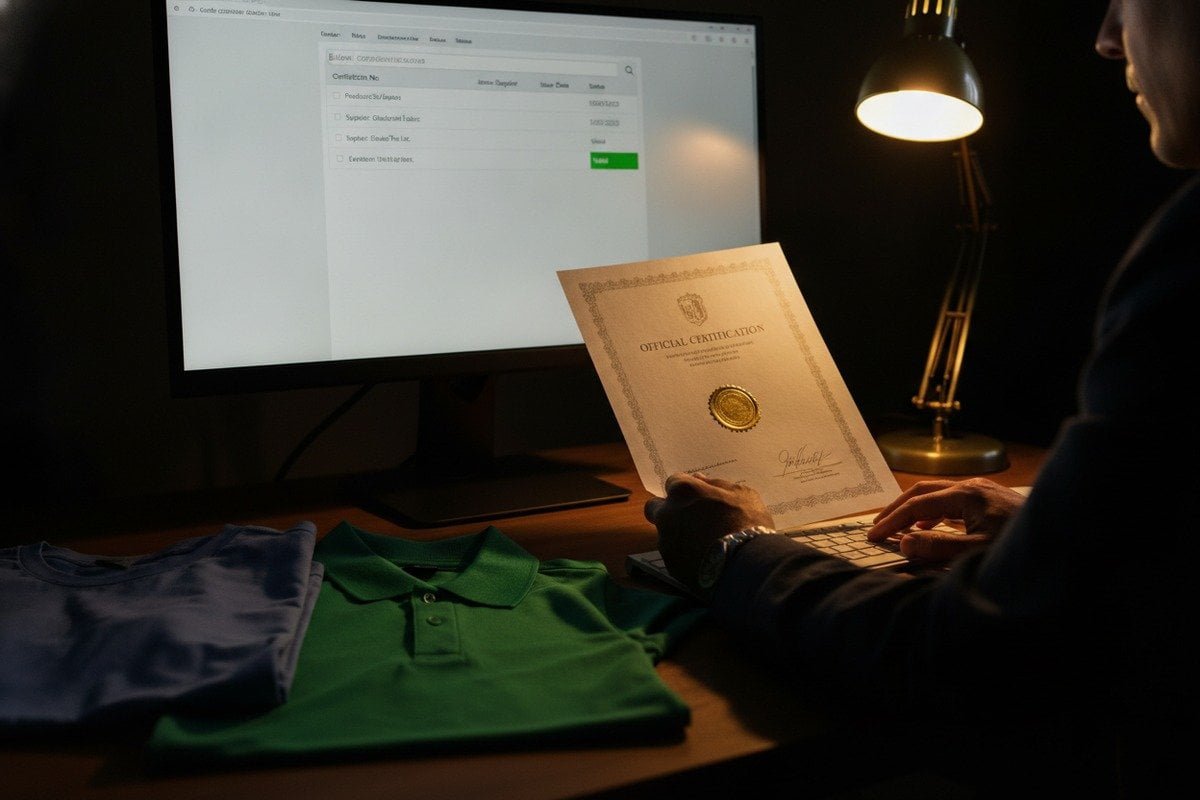
A social audit is a snapshot. It tells you what was happening on the day the auditor visited. It does not guarantee what happens next week or next quarter. This is why continuous monitoring matters more than a single report.
Here is how to structure ongoing oversight:
Quarterly document checks. Every three months, ask your supplier to confirm that all relevant certifications are still active. Request updated certificates if any have been renewed. Flag any gaps immediately.
Annual re-audit expectation. Make it clear in your supplier agreement that you expect annual social audits. If the supplier's certification requires re-audit every one to two years, align your review schedule with that cycle.
Spot checks and unannounced visits. If your order volume justifies it, commission an independent third-party inspection at least once a year. Companies like SGS, Bureau Veritas, and Intertek offer social compliance inspection services that can be booked without notifying the factory in advance.
The Supplier Scorecard Approach
We use a simple supplier scorecard that tracks social compliance alongside other performance metrics. This makes ethical performance part of the regular business conversation, not a one-time checkbox exercise.
A basic scorecard might look like this:
| Metric | Weight | Scoring Criteria | Review Frequency |
|---|---|---|---|
| Active social certification (WRAP, SA8000, etc.) | 25% | Valid = full score; expired = zero | Quarterly |
| Corrective action closure rate | 15% | Percentage of audit findings resolved on time | After each audit |
| Cotton traceability documentation | 20% | Full chain-of-custody = full score; partial = half; none = zero | Per order |
| On-time delivery | 20% | Percentage of orders delivered on schedule | Monthly |
| Product quality pass rate | 15% | Percentage passing final QC inspection | Per shipment |
| Worker grievance incidents | 5% | Number of unresolved worker complaints | Quarterly |
When social performance drops, it becomes visible in the same report where you track quality and delivery. This keeps the conversation balanced and practical.
What to Do When Compliance Lapses
If your supplier's certification expires or an audit reveals new non-conformities, do not panic. But do act quickly.
First, ask for a written explanation and a corrective action plan with deadlines. Second, assess whether the issue is administrative, like a delayed renewal, or substantive, like a labor rights violation. Third, decide whether to continue production, pause until the issue is resolved, or begin qualifying an alternative supplier.
In our experience, the best suppliers are transparent about problems and proactive about fixing them. The ones who hide issues or become defensive are the ones you should worry about.
Leverage Technology for Transparency
Blockchain-based traceability is emerging in the textile industry. While it is not yet standard for promotional apparel, some forward-thinking suppliers are beginning to use digital platforms that create an immutable record of a garment's journey from cotton farm to finished t-shirt. If your supplier offers this kind of transparency, it is a significant advantage.
Even without blockchain, simple digital tools help. Shared cloud folders for certificates, automated expiry reminders, and direct communication channels between your team and the factory's compliance officer can dramatically improve your ongoing monitoring without adding heavy overhead.
Build Long-Term Supplier Relationships
The most effective compliance monitoring happens within stable, long-term supplier partnerships. When you work with the same factory over multiple seasons, you develop mutual trust and institutional knowledge. The factory understands your standards. You understand their capabilities and limitations. Problems get identified and resolved faster.
Short-term, price-driven supplier switching is one of the biggest enemies of social compliance. Every time you change factories to save a few cents per shirt, you reset the compliance clock to zero.
Conclusion
Verifying social responsibility audits for cotton promotional t-shirts comes down to layered evidence: named certifications, valid certificate numbers, independent database checks, cotton traceability, corrective-action records, and ongoing monitoring. No single document is enough. Build a verification workflow, and your sourcing decisions will protect your brand.
Footnotes
1. Explains what social responsibility audits are and their benefits for businesses. ↩︎
2. Provides a comprehensive overview and definition of product certification. ↩︎
3. Official website for the Global Organic Textile Standard (GOTS). ↩︎
4. Official website for Worldwide Responsible Accredited Production (WRAP) certification. ↩︎
5. Official page for the SA8000 standard by Social Accountability International. ↩︎
6. Official website for Fairtrade International, detailing its mission and standards. ↩︎
7. Official website for the Better Cotton Initiative, promoting sustainable cotton farming. ↩︎
8. Official International Labour Organization (ILO) definition and information on child labor. ↩︎
9. Official page detailing the OEKO-TEX® STANDARD 100 for textile safety. ↩︎
10. Official International Labour Organization (ILO) definition and resources on forced labor. ↩︎



Discussion
0 Comments
No comments yet. Be the first to share your thoughts!
Leave a Comment