


Over the years, our production floor has seen hundreds of promotional t-shirt orders 1 ship out to clients across Europe and the US. The one complaint that keeps coming back—more than pricing, more than color matching—is late delivery production capacity 2. When your event date is fixed and the shirts are not there, nothing else matters.
To evaluate a supplier's delivery capabilities for cotton promotional t-shirts, assess their production capacity, verified lead times, logistics network, communication responsiveness, and track record with past clients. Request samples, check references, and use a structured scorecard to compare promises against real evidence before committing to a bulk order.
This guide walks you through every step of that evaluation Industry Benchmarks 3. We will cover how to stress-test lead times 4, plan around event deadlines, verify factory capacity, and set the right logistics expectations. Let's get into it.
How can I verify if a supplier's production lead time for my cotton t-shirts is actually realistic?
When we quote lead times to buyers, we break the timeline into stages—fabric sourcing, cutting, printing, stitching, QC, and packing. Most suppliers just give you one number. That single number hides a lot of risk, and if you do not dig deeper, you will only discover the truth when it is too late.
To verify a supplier's production lead time, ask them to break it down stage by stage—fabric preparation, printing or embroidery, sewing, quality inspection, and packing. Then cross-check their estimate against industry benchmarks, request references from similar-sized orders, and run a small pilot order to measure actual turnaround.
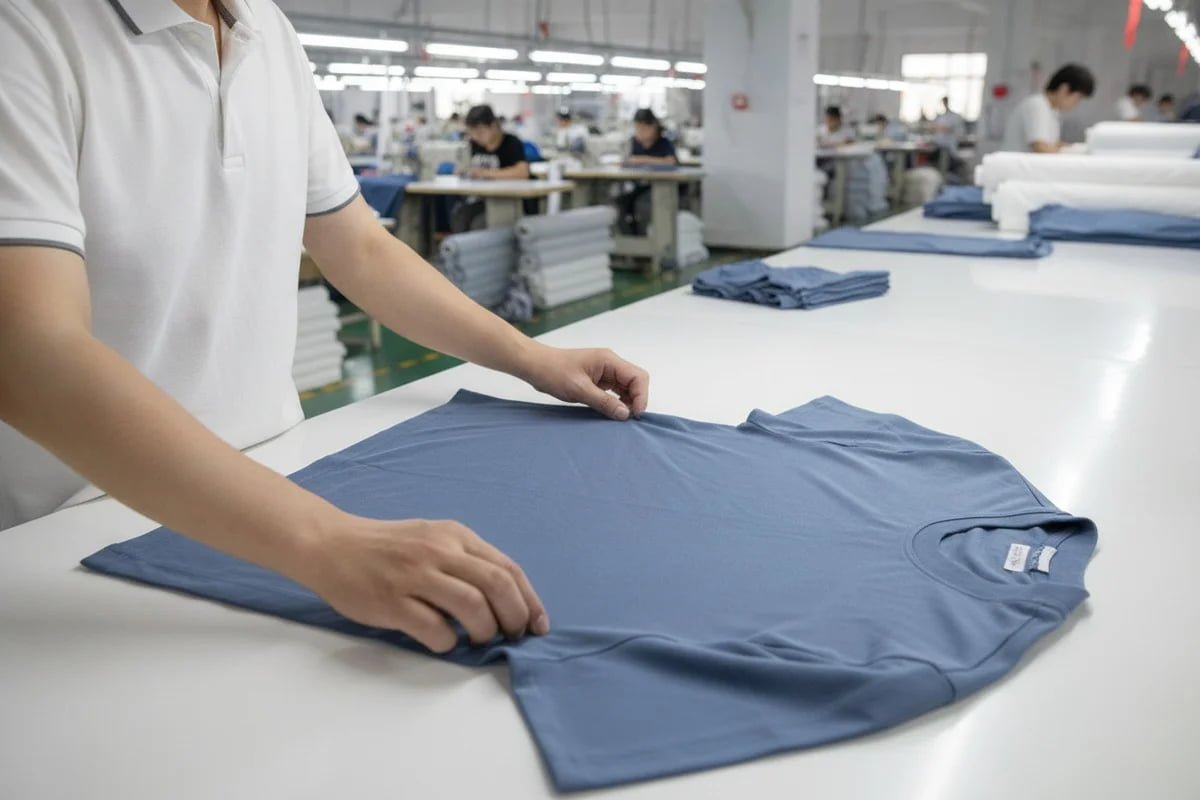
Break the Lead Time Into Stages
A realistic lead time for cotton promotional t-shirts usually falls between 15 and 30 days after sample approval. Rush orders can sometimes be completed in 7 to 10 days, but that typically comes with a surcharge. The key is to not accept one blanket number. Ask the supplier to split the timeline like this:
| Production Stage | Typical Duration | What Can Go Wrong |
|---|---|---|
| Fabric sourcing / dyeing | 5–10 days | Out-of-stock fabric, color matching delays |
| Cutting | 1–2 days | Pattern errors, material waste |
| Printing / embroidery | 3–7 days | Complex designs, ink curing issues |
| Sewing / assembly | 4–8 days | Worker shortage, machine downtime |
| Quality inspection | 1–2 days | Defect rework loops |
| Packing and labeling | 1–2 days | Labeling errors, packaging supply delays |
When we lay out timelines this way for our clients, it becomes immediately clear where buffer time exists—and where it does not. If a supplier cannot provide this breakdown, that is your first red flag.
Cross-Check Against Industry Benchmarks
Standard cotton t-shirt production in China typically runs 20 to 25 days for orders between 500 and 5,000 pieces. If a supplier promises 10 days for 3,000 custom-printed shirts with no rush fee, be skeptical. Either they are cutting corners on QC, or they have not accounted for fabric lead time.
Run a Pilot Order
The single best way to test a lead time claim is to place a small order—say 50 to 100 pieces—and measure every milestone. Pilot Order 5 Track when the supplier confirms the order, when they ship samples, and when the finished goods actually arrive. Compare these dates against what was promised. This costs relatively little but tells you a great deal about what will happen at scale.
Ask the Right Questions
Here are direct questions that reveal the truth:
- What is your standard lead time for cotton promotional t-shirts in quantities of 1,000 to 5,000?
- What was the actual lead time for your last three similar orders?
- Do you hold fabric stock, or do you source it after receiving the order?
- What is your rush-order capability, and what premium does it carry?
A confident, honest supplier will answer these without hesitation. Vague or evasive answers should make you pause.
What steps should I take to ensure my promotional apparel order arrives before my event deadline?
Our team has worked on orders for trade shows, sports tournaments, and product launch events across Europe. The one lesson that never changes: you must plan backward from the event date, not forward from the order date. Most delivery failures happen because the buyer starts the process too late or does not account for shipping and customs. event deadline 6
To ensure your promotional t-shirt order arrives before your event, work backward from the event date. Subtract international shipping time, customs clearance, domestic freight, and a contingency buffer. Then set your production start date and sample approval deadline accordingly. Build at least 10–15 days of buffer into your total timeline.
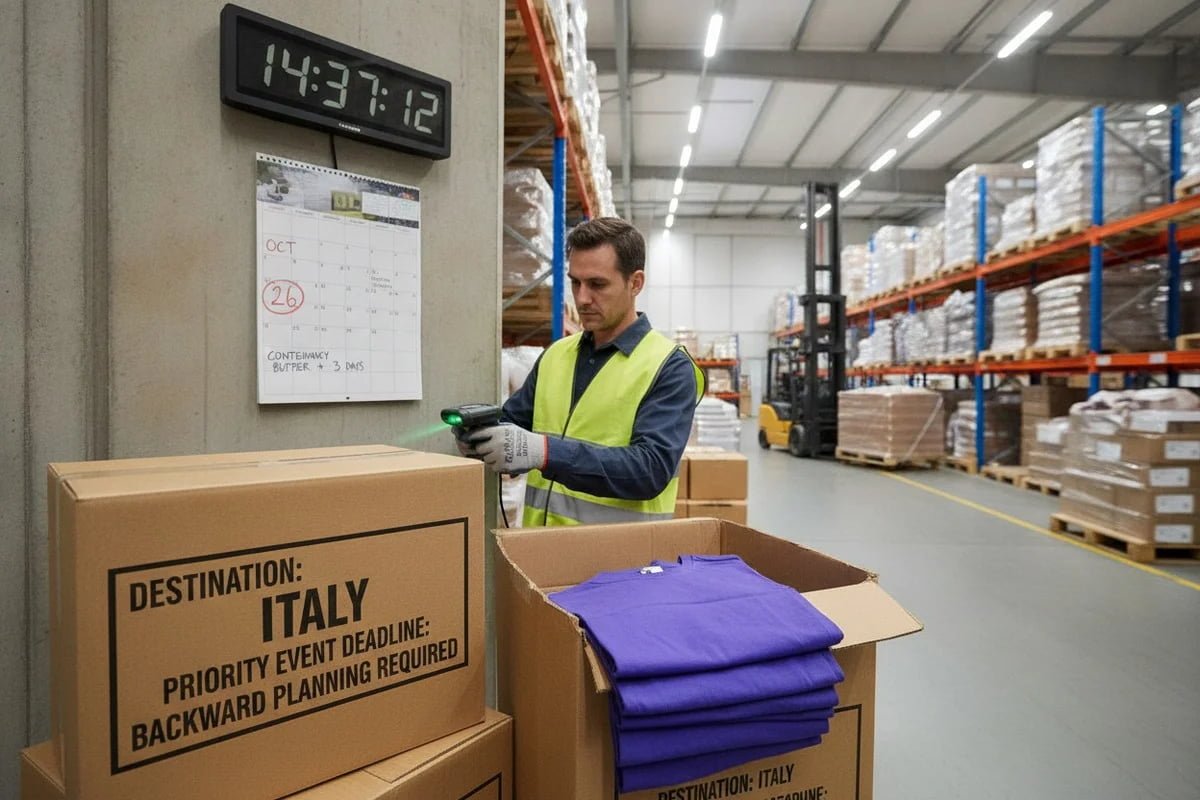
Build a Reverse Timeline
Start with the day you need the shirts in hand. Then subtract each step. Here is a practical example for a buyer in Italy ordering 2,000 cotton promo t-shirts from China:
| Step | Duration | Notes |
|---|---|---|
| Event date | Day 0 | Shirts must be in warehouse |
| Domestic distribution | 2–3 days | From port/warehouse to venue |
| Customs clearance | 3–7 days | Varies by country and paperwork |
| Ocean freight 7 (China to Italy) | 25–35 days | Sea shipping; air is 5–7 days |
| Production | 20–25 days | After sample approval |
| Sample approval | 5–10 days | Including shipping sample to you |
| Contingency buffer | 10–15 days | For unexpected delays |
| Total lead time needed | 65–95 days | Start planning 3+ months early |
This table makes one thing very clear: if your event is 60 days away and you have not approved a sample yet, ocean freight is probably off the table. You either pay for air shipping or you risk missing the deadline.
Choose the Right Shipping Method
Your shipping method choice has a massive impact on total timeline. Ocean freight is the cheapest but slowest. Air freight 8 costs more but cuts 20 to 30 days off the transit. Express courier services like DHL or FedEx can get goods door-to-door in 5 to 7 days but are only cost-effective for small quantities.
Lock Down Milestones With Your Supplier
Do not just agree on a delivery date. Agree on milestones: sample approval date, production start date, production completion date, and shipment date. Ask for photo or video updates at each stage. When we work with our European clients, we send production progress photos at cutting, printing, and packing stages. This keeps everyone aligned.
Have a Backup Plan
Even with the best planning, things go wrong. Ports get congested. Fabric deliveries get delayed. A good buyer always has a Plan B. This could mean identifying a secondary supplier, having a small safety stock of blank shirts locally, or negotiating a partial air-shipment option with your supplier for the most critical portion of the order.
Communicate Your Deadline Early and Often
Tell your supplier the event date on day one. Make it clear that this is a hard deadline, not a soft target. Suppliers who understand the stakes will allocate resources differently. In our experience, when a client tells us upfront that shirts are needed for a specific tournament or product launch, we prioritize that order in our production schedule.
How do I assess if a factory has the capacity to handle my bulk cotton t-shirt requirements?
We have had buyers come to us after a bad experience with another supplier—often a supplier who accepted a 10,000-piece order but clearly only had the machinery and workforce for 2,000. Capacity mismatches are one of the most common and most damaging problems in promotional apparel sourcing.
To assess a factory's capacity for bulk cotton t-shirt orders, request their daily or monthly output figures, ask about current production load and equipment, check for evidence of similar past orders, and if possible visit the facility or request a video walkthrough. Factories should be transparent about what they can and cannot handle.

Ask for Hard Numbers
A factory that can handle bulk orders will have specific production statistics ready. You want to know:
- How many t-shirts can you produce per day?
- How many sewing machines and printing stations do you operate?
- What is your current production utilization rate?
- What is the largest single t-shirt order you have completed in the past 12 months?
If they cannot answer these questions clearly, they are either too small for your order or they are not well-managed.
Request Evidence of Past Performance
Ask for case studies or references from clients who placed orders of a similar size. A factory that regularly fills 5,000-piece orders will have documentation—packing lists, shipping records, or client testimonials. One practical tip: ask the supplier to connect you directly with a past client. Most reliable factories are happy to do this.
Evaluate Equipment and Workforce
The type and quantity of equipment matters. For cotton promotional t-shirts, the key equipment includes:
- Cutting machines — determine how much fabric can be cut per day.
- Screen printing or DTG machines — set the bottleneck for custom designs.
- Sewing lines — the number of operators directly affects daily output.
- Heat press or curing units — needed for print finishing.
| Factory Size | Typical Daily Output | Suitable Order Range |
|---|---|---|
| Small (10–30 workers) | 200–600 shirts/day | 500–3,000 pieces |
| Medium (30–80 workers) | 600–2,000 shirts/day | 3,000–10,000 pieces |
| Large (80+ workers) | 2,000–5,000+ shirts/day | 10,000+ pieces |
If your order is 5,000 pieces and the factory has 15 workers with three sewing machines, the math does not work. Always match your order size to the factory's real capacity.
Consider Scalability and Repeat Orders
Your first order might be 2,000 pieces, but if the promotion goes well, you may need 5,000 or 10,000 next time. Ask the supplier about their ability to scale up. Do they have relationships with subcontractors? Can they add shifts? Factories with good scalability planning can flex their output without sacrificing quality.
Visit or Virtually Inspect the Facility
If you can visit the factory, do it. Nothing replaces seeing the production floor, meeting the team, and counting machines with your own eyes. If travel is not practical, request a live video tour. A supplier who refuses to show you their facility is hiding something. When we welcome visitors at our facility in Zhejiang, we walk them through every stage—from fabric storage to the finished goods warehouse. It builds trust, and it should.
What logistics and tracking standards should I expect from my Chinese promotional wear supplier?
Shipping a container of promotional t-shirts from Zhejiang to a warehouse in Milan or London involves many moving parts. Over the years, we have learned that the production side is only half the battle. The other half is logistics—getting the goods from our door to yours, on time and intact.
From a Chinese promotional wear supplier, you should expect clear shipping method options, real-time tracking numbers, proactive shipment updates, proper export documentation, and a defined process for handling delays or damaged goods. The best suppliers also offer flexible shipping methods and maintain established relationships with reliable freight forwarders and carriers.
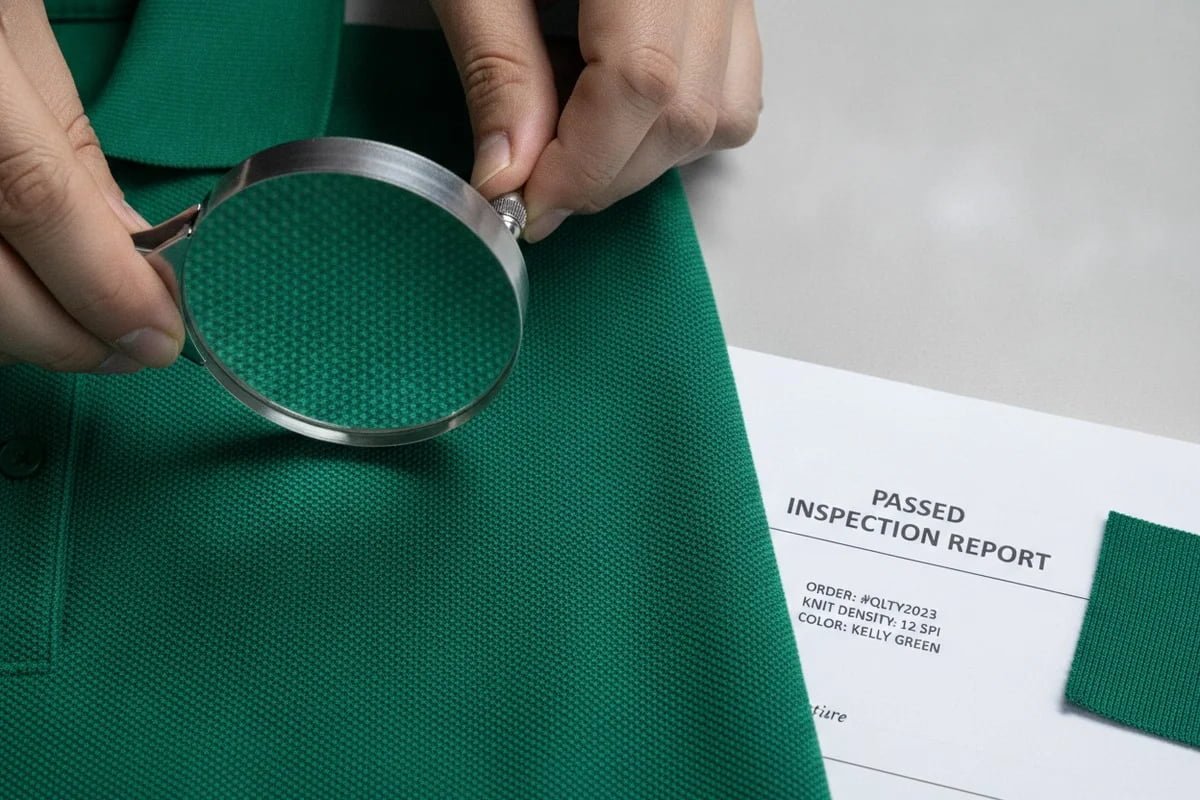
Shipping Method Transparency
Your supplier should clearly explain the shipping options available and help you choose the right one based on your budget and timeline. The three main options are:
- Ocean freight (FCL or LCL): Cheapest for large orders. Takes 20 to 40 days depending on the destination.
- Air freight: Faster at 5 to 10 days, but significantly more expensive per kilogram.
- Express courier (DHL, FedEx, UPS): Best for samples and small urgent shipments. Door-to-door in 3 to 7 days.
A good supplier will explain the trade-offs honestly and not push you toward the most expensive option unless it is genuinely necessary.
Real-Time Tracking and Updates
Once goods leave the factory, you should receive a tracking number and the name of the carrier or freight forwarder. For ocean shipments, this means a Bill of Lading number and vessel tracking link. For air shipments, an airway bill number. For couriers, a standard tracking number.
Beyond the tracking number, the best suppliers provide proactive updates. They do not wait for you to ask. They tell you when goods are picked up, when they clear Chinese customs, and when the vessel or flight departs. In our workflow, we send a shipping notification with all document copies—commercial invoice 9, packing list, Bill of Lading—within 24 hours of shipment.
Documentation and Customs Readiness
International shipments require proper paperwork. At a minimum, expect:
- Commercial invoice
- Packing list
- Bill of Lading or Airway Bill
- Certificate of Origin 10 (if needed for preferential tariff treatment)
- Any required compliance certificates (OEKO-TEX, GOTS, etc.)
Missing or incorrect documents cause customs delays. A reliable supplier prepares these documents accurately and sends them to you in advance so your customs broker can pre-clear the shipment.
Handling Delays and Problems
No logistics chain is perfect. Ports get congested. Ships get rerouted. The question is not whether problems will happen but how the supplier handles them. Ask these questions upfront:
- What happens if the shipment is delayed beyond the agreed date?
- Do you offer any compensation or expedited re-shipping for late deliveries?
- What is your process if goods arrive damaged or with quantity shortages?
- Can you split shipments if part of the order is ready before the rest?
Technology and Communication Tools
Increasingly, buyers expect more than email updates. Some suppliers offer order management portals, API integrations with inventory systems, or at least organized shared spreadsheets that track order status in real time. Even without high-tech tools, a supplier who responds to WhatsApp or email within a few hours and shares photos, documents, and tracking links promptly is meeting a high communication standard.
Post-Delivery Support
The relationship does not end when the container arrives. If you open boxes and find that 200 out of 2,000 shirts have a print defect, or the color is off from the approved sample, the supplier needs a clear process for resolution. This could include partial refunds, replacement shipments, or credits on the next order. Ask about this policy before you place the order, not after a problem occurs.
Conclusion
Evaluating a supplier's delivery capability comes down to evidence, not promises. Use a structured scorecard, verify claims with samples and references, plan backward from your deadline, and never skip the logistics conversation. The right supplier delivers the right shirts, on time, every time.
Footnotes
1. Provides current sales data and trends for the promotional products industry. ↩︎
2. The original link was inaccessible. This replacement defines production capacity in manufacturing, explains how to calculate it, and discusses ways to improve it, which is highly relevant to evaluating a supplier's capabilities. ↩︎
3. Offers statistics on the promotional products market, serving as an industry benchmark. ↩︎
4. Defines manufacturing and supply chain lead times, crucial for production planning. ↩︎
5. Explains lead time, which a pilot order helps verify in manufacturing. ↩︎
6. Provides context on project management principles, including deadline management. ↩︎
7. Explains ocean freight as a shipping method, its process, and benefits. ↩︎
8. Details the advantages of air freight, including speed and reliability. ↩︎
9. Explains the commercial invoice's role in international shipping and customs. ↩︎
10. Defines Certificate of Origin and its importance in international trade. ↩︎



Discussion
0 Comments
No comments yet. Be the first to share your thoughts!
Leave a Comment